
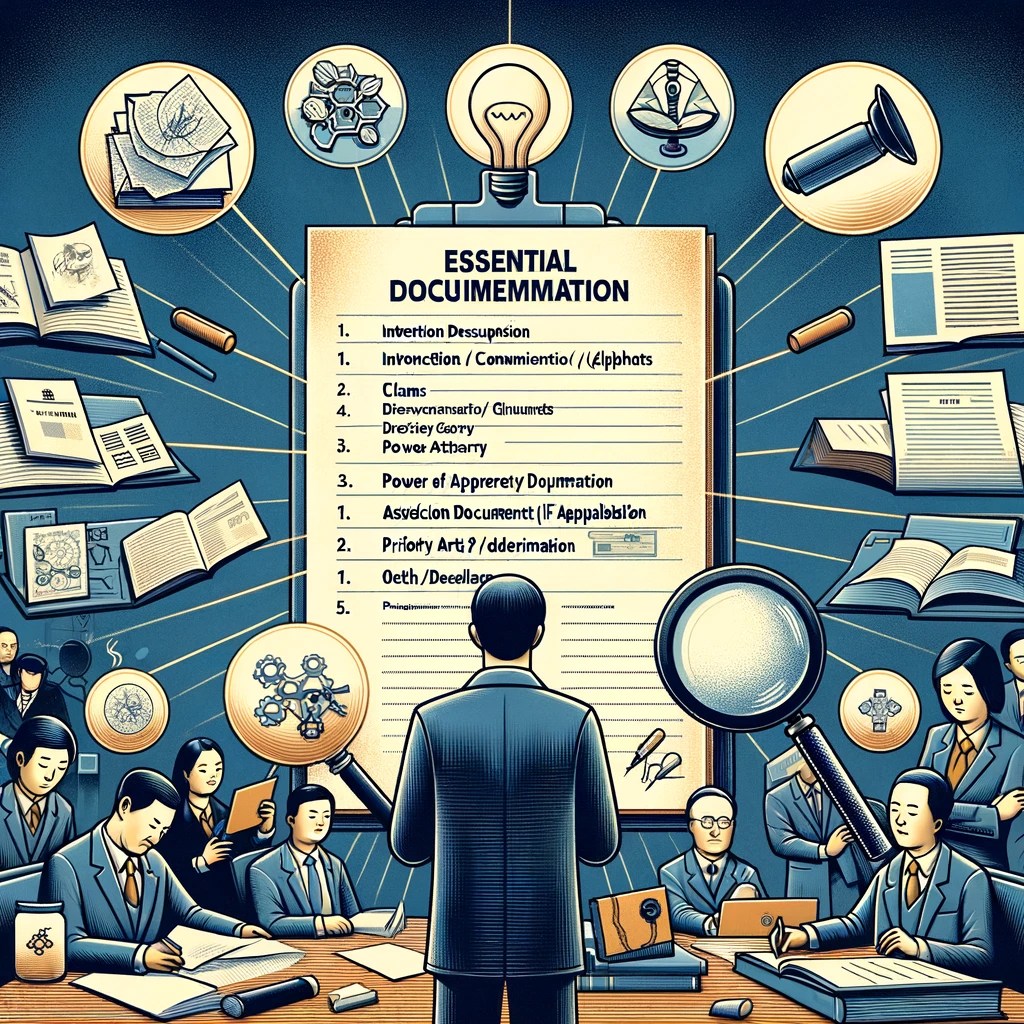
When applying for a patent in China, a meticulously prepared documentation package is essential for the successful filing of your application. Understanding the intricacies of such a process can be challenging, especially for foreign entities. Here’s a comprehensive overview of the documentation required for a patent application in the People’s Republic of China, crafted to assist U.S. customers in navigating this intricate process.
1. Application Form: The cornerstone document outlining the patent request. It must include the title of the invention, the inventor’s details, and the applicant’s information. Ensuring accuracy in this foundational document is paramount.
2. Description of the Invention: This is a detailed document that describes the invention in depth. It should be clear, comprehensive, and complete enough to allow someone skilled in the relevant field to execute the invention. Any omission here could lead to an incomplete protection scope.
3. Claims: The claim(s) define the scope of the patent protection sought and must be based on the description. This is a critical component as it determines the boundaries of legal protection. Precise language and strategic formulation of claims are crucial for robust protection.
4. Abstract: A succinct summary of the essential technical aspects of the invention. Although it does not define the scope of protection, it is significant for search and examination purposes.
5. Drawings and Photographs (if applicable): Visual representations to support the description and claims, particularly when the invention involves unique designs or complex structures. Clarity and precision in these materials can make a substantial difference in the understanding of an invention.
6. Power of Attorney (if filed through an agent): A legal document authorizing the patent agent to act on behalf of the applicant. It’s a formal declaration of representation.
7. Assignment Document (if applicable): If the rights to apply for the patent are being transferred, an assignment document must be included, evidencing the transfer of rights from the inventor to the applicant.
8. Priority Documents (if priority is claimed): For those seeking to capitalize on an earlier filing date from a foreign patent application, priority documents must be accurately translated and timely submitted.
9. Disclosure of Prior Art: An applicant is required to disclose any known prior art that could be relevant to the patentability of the invention. This promotes transparency and can expedite the examination process.
10. Oath or Declaration: A statement by the inventor asserting originality and ownership of the invention. This is a legal attestation of the inventor’s rights.
11. Examination Request (for invention patent): After the preliminary examination, a request for substantive examination must be submitted within three years from the filing date, marking the next critical phase of the patent application process.
The Chinese patent system is rigorous, and each document must adhere to the strict guidelines set forth by the China National Intellectual Property Administration (CNIPA). As your dedicated partner, we not only assist in preparing these documents but also provide strategic advice on navigating the Chinese patent landscape. With our expertise, we ensure that your documentation is in full compliance with Chinese patent law, thereby maximizing the chances of securing your patent rights in China.
#iplaw #ip #patent #patents #Innovation #Intellectualproperty #Intellectualpropertyright #Intellectualpropertylaw #patentlaw #startup #China #businessstrategy #trademark #chinabusiness #patentattorney
 绿洲慧写 | AI 辅助专利撰写专家